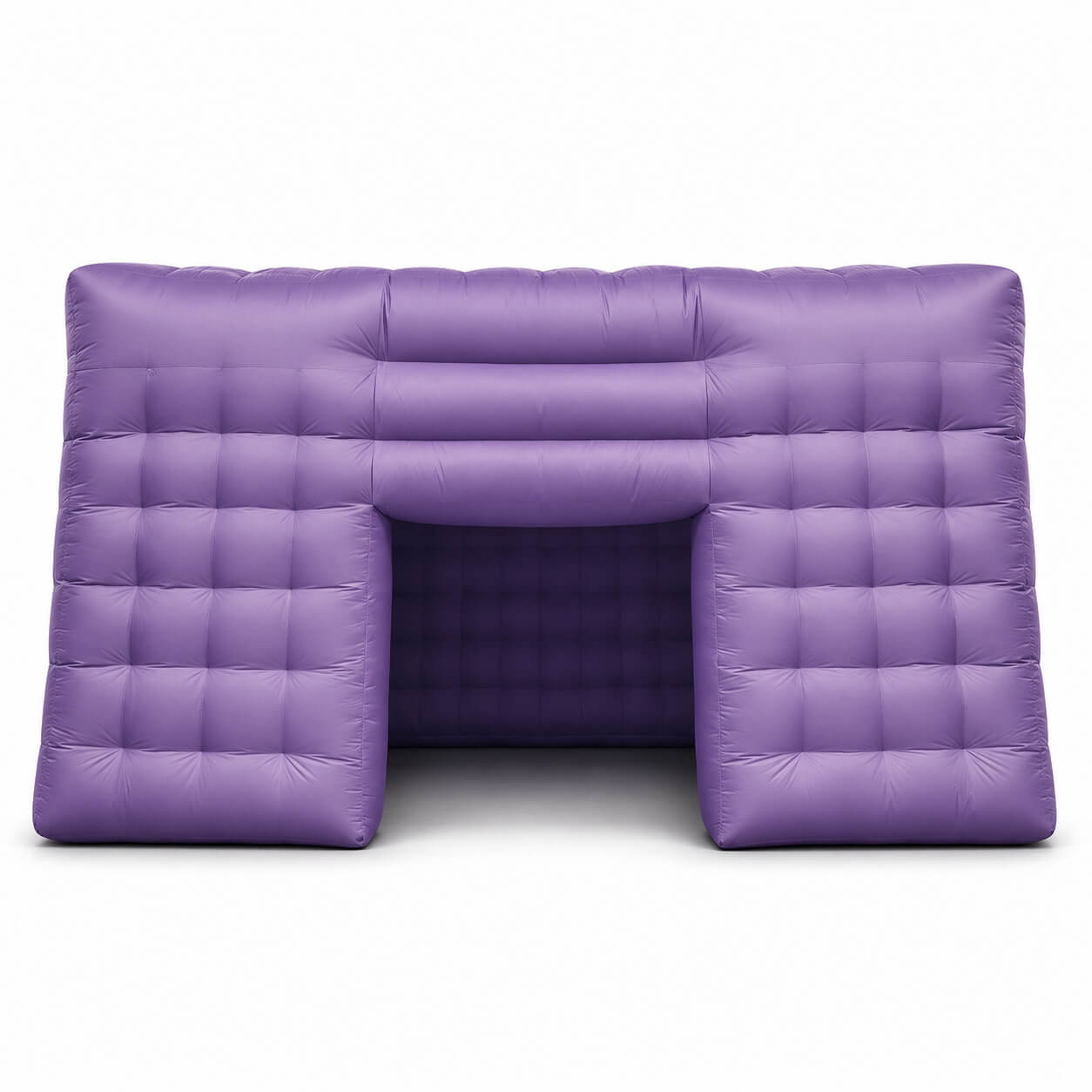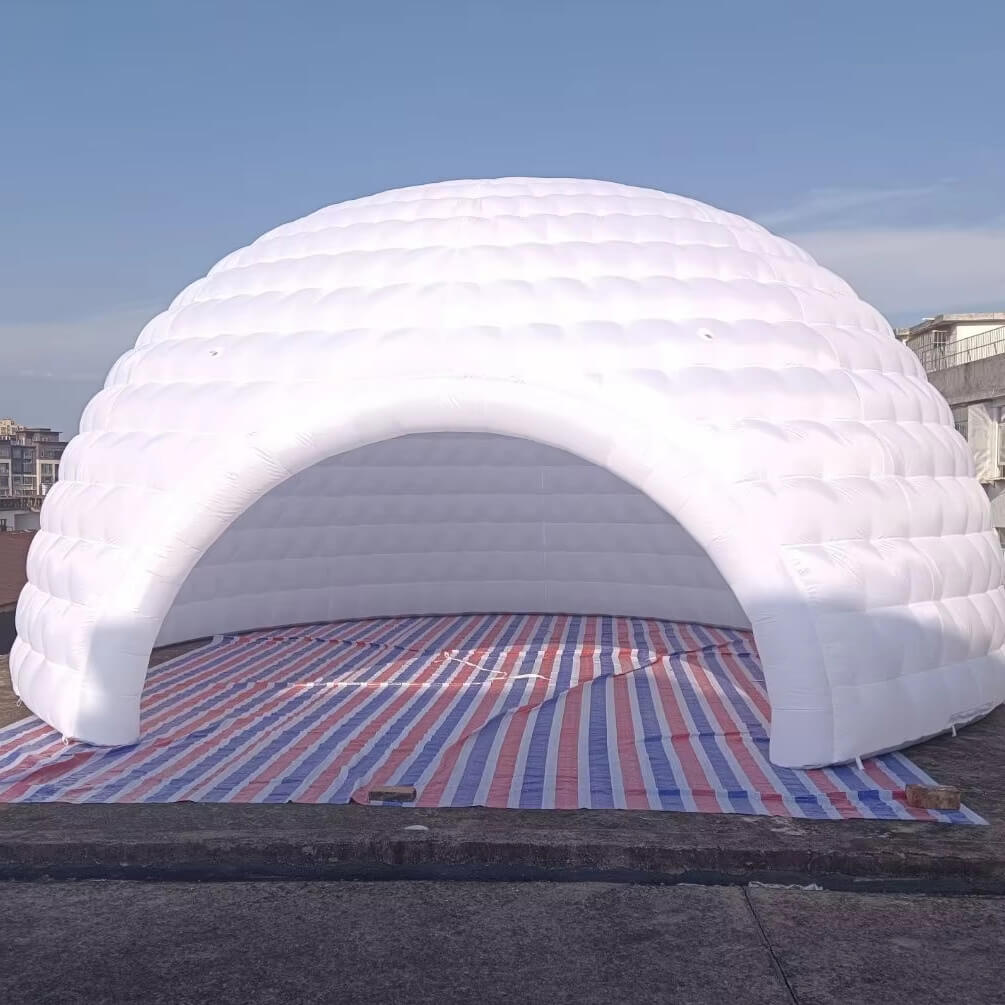
Logistics & Deflated Footprint vs. Rigid Truss Structures
Conventional aluminum truss marquees and rigid frame tents deliver structural rigging capacity for heavy lighting grids, but they demand heavy truck volume, ballast steelwork, and multi-crew rigging hours. Custom inflatable event domes offer a markedly different logistical profile: the shell folds into protective export packaging and relies on air pressure rather than rigid beams to define its monumental dome silhouette.
Because exact packed weight and carton volume depend on diameter, selected fabric (such as PVC tarpaulin, TPU-coated Oxford, or polyester), and blower count, exact transport specs are always confirmed per project after design approval.
Navigating Municipal Plaza Permits, Egress & Fire Compliance
Festival producers frequently ask which municipal permits, fire standards, and wind-load ratings apply when installing a giant inflatable dome in a public square. The honest B2B answer is that compliance rules are governed strictly by the local municipality and venue authority—no custom inflatable carries universal automatic certification across all jurisdictions.
Before requesting a quotation, confirm with your local permitting office what temporary-structure drawings, emergency exit widths, non-penetrating ballast weights, and fabric test documents are required. Sharing those criteria upfront allows us to evaluate material options and entrance geometry accurately.
Power Planning, Ventilation & Interior Usability
Large inflatable event domes typically operate on continuous-air blowers. Production planners should confirm regional supply voltage, plug type, dedicated electrical circuits, cable ramps, and clear weather stop-use procedures. Never assume a fixed guest capacity without verifying usable interior clearance and local venue egress regulations.